Testing and Respiratory Viruses
Create a study schedule and stick to it. Allocate time for reading, writing, listening, speaking, and problem-solving exercises every day. #生活技巧# #英语学习#
Testing for respiratory viruses when you feel sick can help guide decisions to further protect yourself and others. Testing may be most helpful if you are at higher risk for getting very sick, so you can seek healthcare quickly and start treatment, if apporpriate.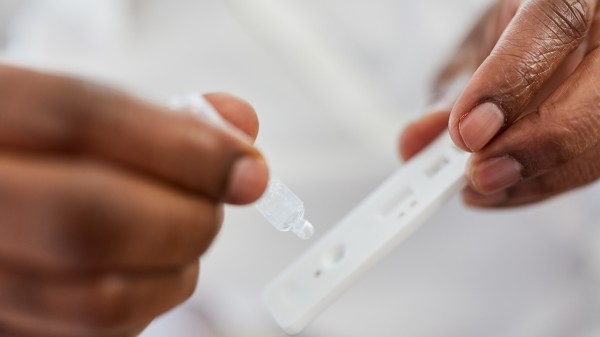
An additional strategy to further protect yourself and others
Testing can provide useful information to help you make prevention or treatment choices.
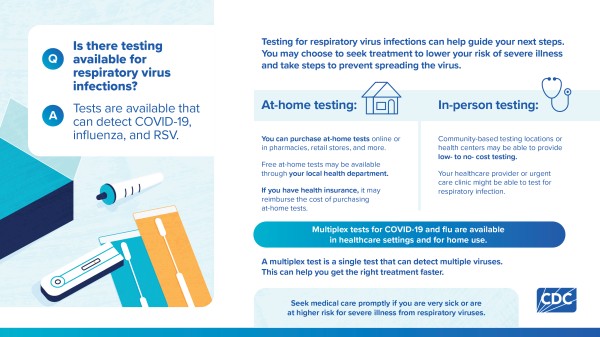
Testing for respiratory viruses can help you decide what to do next, like getting treatment to reduce your risk of severe illness and taking steps to lower your chances of spreading a virus to others. There are several types of tests for respiratory virus infections.
Antigen tests for flu and COVID-19 infections detect parts of the virus (antigens) that stimulate an immune response and usually return results quickly (around 15-30 minutes). Self-tests, or at-home tests, are often antigen tests that can be taken anywhere without having to go to a specific testing site.
Nucleic acid amplification tests (NAATs or "molecular tests"), which include polymerase chain reaction (PCR) tests, detect actual genetic material of the virus. For these tests, samples are usually taken by a healthcare provider and transported to a laboratory. Some NAATs may be performed at the point-of-care and provide results more quickly. Although most antigen tests are usually faster, they are often not as sensitive as NAATs. This means that you might get a negative result with an antigen test, but actually be infected with the virus, especially during seasons when respiratory viruses are circulating at high levels.
At-home multiplex tests for COVID-19 and flu are also available. A multiplex test is a single test that can detect multiple viruses. Molecular multiplex self-tests are preferred over antigen self-tests.
How it works
Testing can help you find out if you are infected with a certain respiratory virus. While testing doesn't change how likely you are to catch or spread respiratory viruses, or how severe your illness might be, it can provide useful information to help you make choices about treatment and take actions to reduce the spread. Molecular testing, such as NAATs, is recommended for patients with symptoms who are suspected of having a respiratory illness like flu and/or COVID-19 to help start timely treatment, if indicated.
Steps you can take
Make a plan for getting tested or seeking healthcare quickly if you become sick, especially if you are at higher risk for severe outcomes and could benefit from treatment for respiratory viruses. Rapid tests can be used for screening before gathering with others, especially to help protect people in your life who have risk factors for severe illness.Steps organizations can take
Provide employees with paid time off to seek testing for respiratory viruses, as needed.
Key times for prevention
All of the prevention strategies can be helpful to reduce risk. Additional measures, like testing, are especially helpful when:
Respiratory viruses are causing a lot of illness in your community. You or the people around you were recently exposed to a respiratory virus, are sick, or are recovering. You or the people around you have risk factors for severe illness.Aug. 18, 2025 Was this page helpful?
Thank you for your feedback!
How would you rate this information?
Thank you for your feedback!
Not helpful Very helpful网址:Testing and Respiratory Viruses https://klqsh.com/news/view/319758
相关内容
Fit TestingClinical Testing and Diagnosis for Lyme Disease
Laboratory Testing for CMV and Congenital CMV
Animal Testing Facts and Statistics
Laboratory Testing for Pertussis
Eve Air Mobility Showcases Aircraft Design Evolution, Testing Progress, and Integrated Services Solutions at the Paris Air Show 2025 – Eve
Laboratory Testing for Epstein
Health Effects of Climate and Air Pollution in Buenos Aires: A First Time Series Analysis
Xx.knit.bid: A Dangerous Scam Website and How to Remove It
MIT ACT And SAT Scores Requirements: Full Guide
随便看看
最新乐趣
- 婚礼现场被设局刁难,女主主动出击拆穿督军府阴谋
- 熹妃回宫96
- 流朱舍命救禁足期间晕倒的甄嬛 又是谁的意难平
- 林磊儿:我保证我的表哥是天使
- 庾澄庆被问能否同框伊能静秒拒绝,找恩利当嘉宾“还要等他有空”
- 孟子义李昀锐你懂什么叫内娱最权威的正缘c P!
- 高颜值短片精选集·VOL.42
- 君黛多好一个坏孩子呀~趁魏娆回门 准备干掉她在替换回去.
- 韩国女生真敢穿!
- 妻子因丈夫太穷要离婚,不料丈夫偷偷中了两亿大奖!
热点乐趣
- 89733
- 78025
- 64242
- 60290
- 39814
- 35811
- 32461
- 22788
- 22735
- 21501